1 hr
Underwater Walking Adventure in Willemstad
Walk the ocean floor among tropical fish and coral reefs—no diving skills needed.
Reserve
Hand-picked by our editors — only the best 5 underwater experiences from 18 reviewed.
Verified partners for every tour, free cancellation where available, and instant confirmation on every booking.
1 hr
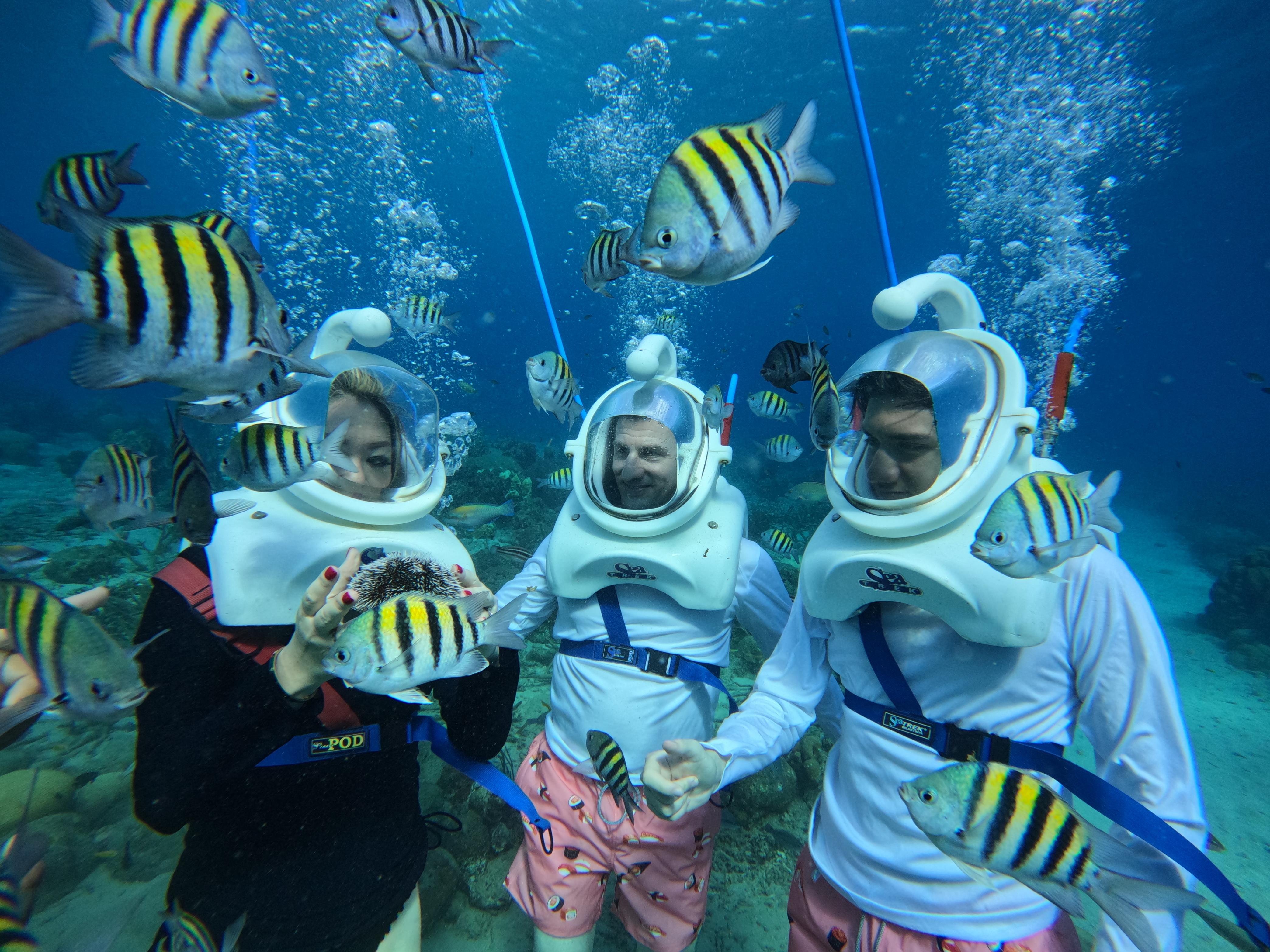
Walk the ocean floor among tropical fish and coral reefs—no diving skills needed.
Reserve
3 hr
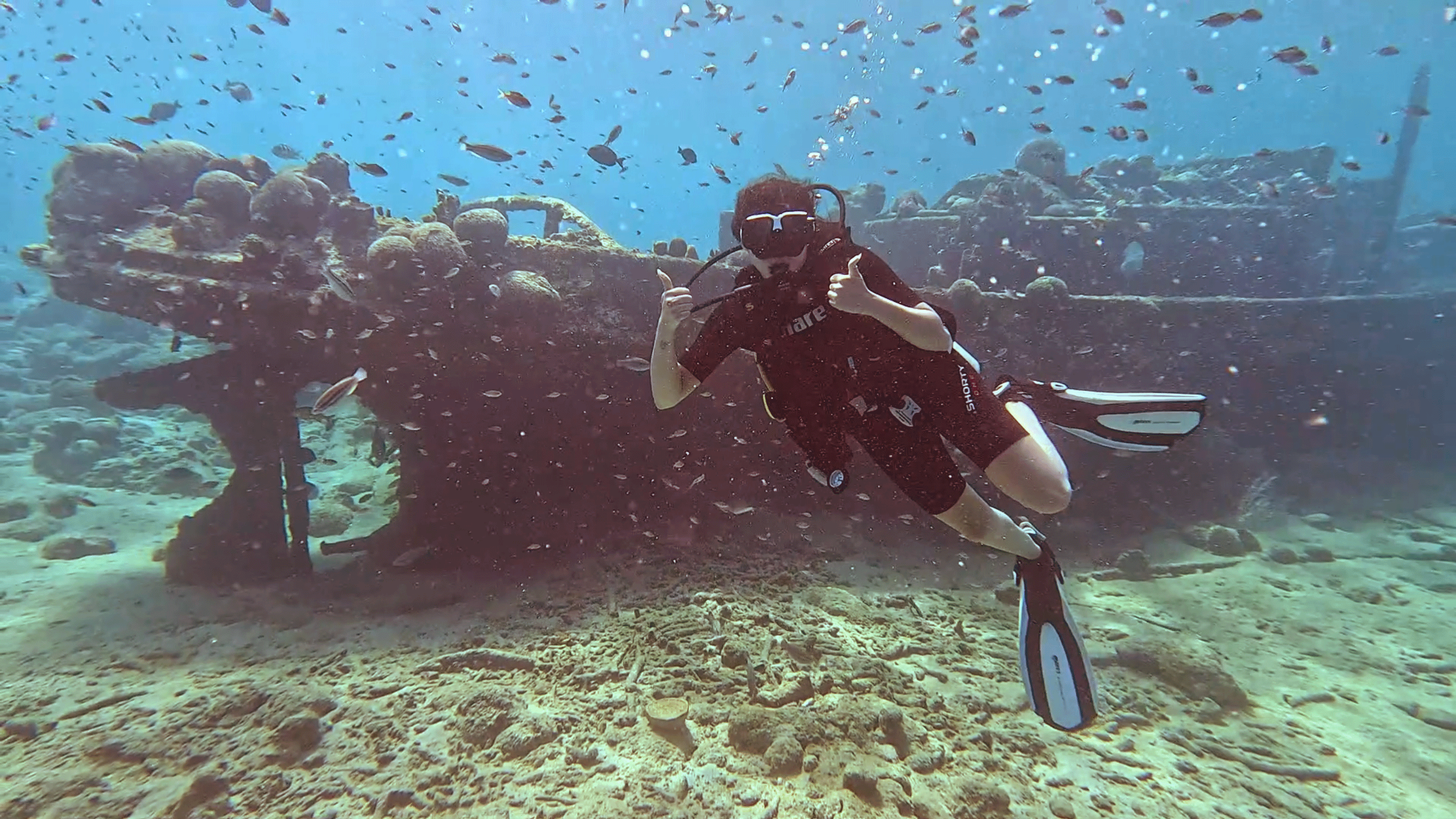
One-on-one underwater introduction with a personal instructor—no crowds, just you and the Caribbean.
Reserve
1 hr
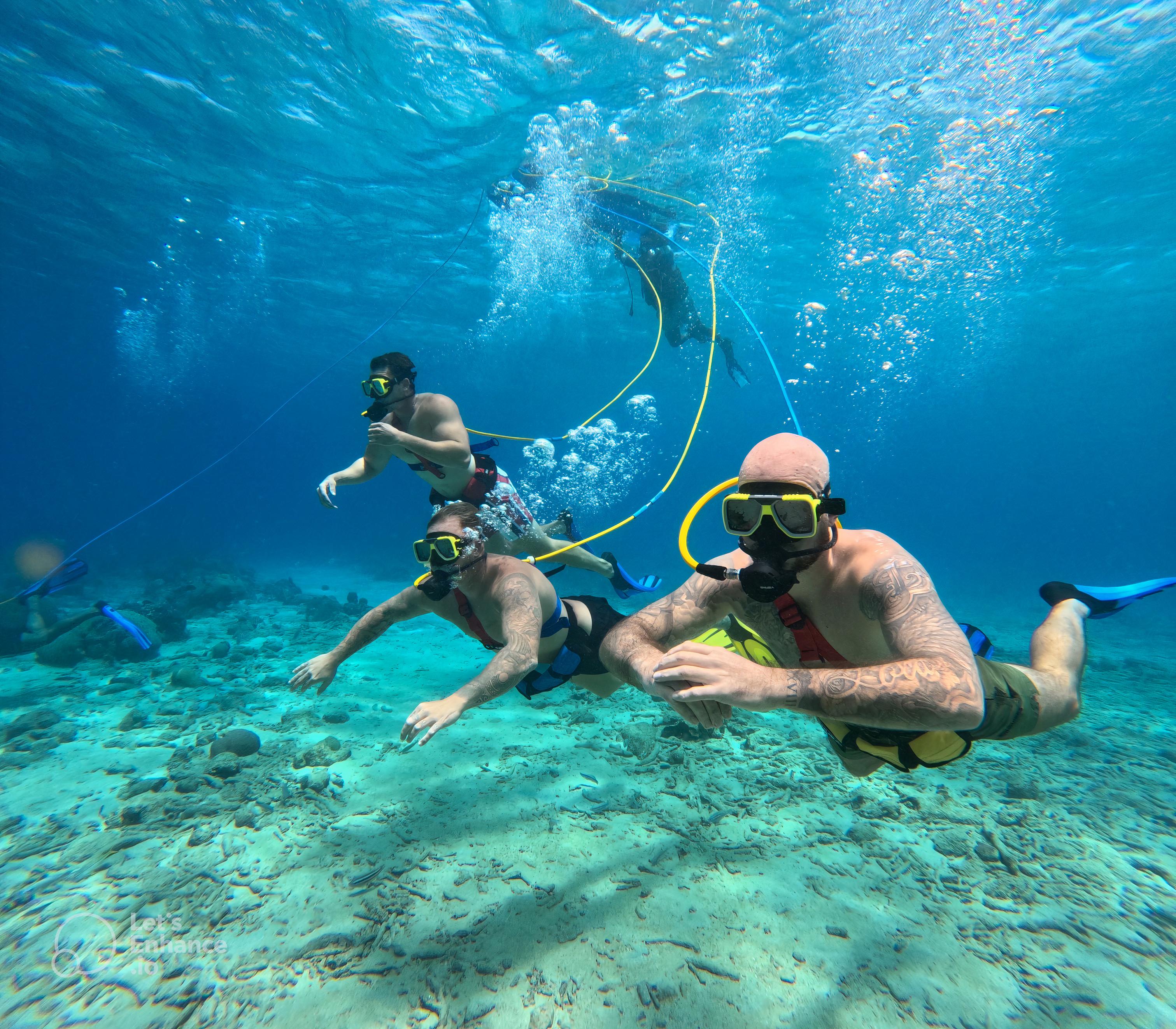
Explore Curaçao's coral reefs with SNUBA® – easier than scuba, deeper than snorkeling, no experience required.
ReservePrices from verified partners. Availability updates in real time at checkout. Free cancellation policies apply where shown.
The landmarks, rooms, and views travelers on this tour remember — all visible on a single visit.
A specialized path that allows you to walk along the seafloor while observing marine life at eye level.
Observe exotic fish and coral formations thriving in their natural environment.
Designed to keep your head dry while providing constant airflow during your experience.
Learn about the delicate balance of the Caribbean ecosystem from professional guides.
See firsthand the conservation efforts protecting the local underwater landscape.
Helmet diving curacao tours provide a dry-head experience for natural breathing, whereas SNUBA offers a more immersive aquatic connection using a mouth-held regulator.
| Feature | Top pick Sea Trek Helmet | SNUBA® |
|---|---|---|
Breathing Method |
Compressed air inside helmet | Mouth-held regulator |
Ease of Movement |
Walking on seafloor | Swimming with tether |
Depth Limit |
15–20 feet (4-6 m) | 20 feet (6 m) |
Certification Required |
None | None |
Suitable for Non-Swimmers |
Yes | Yes |
Equipment Weight |
Negligible (buoyant) | Lightweight harness and air line |
| See tickets → |
Verdict: Those seeking the most effortless path to observing sea life should book helmet diving curacao tickets, while active adventurers often prefer the mobility of SNUBA.
Choose your ticket, select your date, and reserve in under two minutes. Secure checkout handled by our verified partner.
Instant confirmation by email, with a mobile voucher you can save offline. No printing, no queuing at a collection desk.
Arrive at the entrance, show your voucher on your phone, and walk in. Most tickets include priority or skip-the-line access.
Practical details for your visit straight from our verified partners — hours, access, rules, and how to get there.
Dr. Martin Luther King Boulevard
Look for the main dive center signage
Direct service to the boulevard is the most convenient option.
Follow signs toward the coastal dive centers and use designated parking.
Participants should wear a swimsuit under comfortable clothing. Bring a change of dry clothes for after your helmet diving curacao session.
Personal belongings can be stored in secure lockers at the facility. Keep valuables minimal during your helmet diving curacao experience.
Underwater cameras are permitted if they can be securely attached. Guests often capture the marine life during their helmet diving curacao tour.
The experience requires basic mobility to descend the ladder into the water. Contact staff to discuss physical requirements for your helmet diving curacao booking.
Phones should be left in secure storage areas. Waterproof cases are recommended if you plan to document your helmet diving curacao journey.
The activity is suitable for children who meet the minimum age and height requirements. Families enjoy this underwater walk as a safe alternative to traditional scuba diving curacao trips.
Drinking water is encouraged before and after the dive. Food is not permitted on the dive platform itself.
Pets are strictly prohibited at the facility. Please make arrangements for animal care before your visit.
Listen carefully to the instructor's briefing regarding safety signals. The 135 USD price covers the necessary gear for your helmet diving curacao excursion.
Dr. Martin Luther King Boulevard
Look for the main dive center signage
Get directionsBest time to go, insider tips, nearby landmarks, and the cancellation fine print — flip through to skim what matters to you.
How crowds, weather, and events shift across the year.
August temperatures provide warm water conditions for an comfortable underwater walk.
Drier weather offers consistent visibility for helmet diving curacao tours.
Ideal sea conditions frequently occur during these months.
Fewer crowds allow for a more personalized experience.
Small details that turn a good visit into a great one.
Drink plenty of water before your helmet diving curacao tour to stay comfortable in the heat.
Secure your helmet diving curacao tickets in advance to guarantee your preferred time slot.
The instructor covers vital air-pressure equalization techniques during the briefing.
Apply reef-safe sunscreen before heading out to the dive area.
Arrival during the 09:00–16:00 window ensures you avoid the intense mid-day heat.
Non-bookable sights within a short walk — free to visit, easy to pair.
A popular stretch of sand with various amenities and clear water.
Adjacent facility featuring marine life exhibits and feeding sessions.
The famous pontoon bridge connecting parts of Willemstad.
Iconic row of colorful colonial buildings along the waterfront.
Flexible, no hidden fees.
Full refunds are available for cancellations made within the designated window provided by the operator. Please refer to your booking confirmation for specific deadline terms regarding your 135 USD helmet diving curacao tour.
Hand-picked options within walking distance — pick a district for vibe, or a specific hotel for convenience.
Upscale lodging located near the primary dive site.
Smaller property offering personalized service and proximity to city sites.
Convenient self-catering units for families and groups.
The first Sea Trek helmet diving system arrived in Curaçao in 2009, adapting technology originally developed for commercial underwater construction to recreational tourism along Willemstad's protected reef zones. Unlike scuba apparatus, which requires certification and equalization training, the helmet maintains a continuous air supply at ambient pressure, allowing participants to walk upright on the ocean floor at depths between four and six meters without prior diving experience. Helmet diving Curaçao tours operate from a floating platform anchored above coral gardens frequented by parrotfish, sergeant majors, and blue tangs. The helmet itself weighs approximately eighteen kilograms on land but achieves neutral buoyancy once submerged, supported by a constant flow of compressed air delivered through an umbilical hose connected to surface compressors. Participants descend a weighted ladder, step onto a submerged pathway marked by guide ropes, and spend twenty to thirty minutes traversing sandy channels bordered by elkhorn and brain coral formations. The system's open design permits normal breathing and conversation, a feature that distinguishes it from snorkeling masks or full-face scuba regulators. Willemstad's underwater topography includes the remnants of the SS Oranje Nassau, a Dutch freighter scuttled in 1906 to create an artificial reef, now encrusted with sponges and home to moray eels and Caribbean spiny lobsters. Helmet dive operators position their platforms along this wreck corridor during morning hours, when visibility routinely exceeds twenty meters and nutrient upwelling draws schools of yellowtail snapper and permit. The Caribbean Sea's salinity—36 parts per thousand—provides buoyancy that reduces the physical effort required to move underwater, though lead-soled boots anchor each step against surge and current. The experience accommodates non-swimmers and participants as young as eight years old, provided they meet the minimum height requirement of 1.2 meters and can equalize ear pressure. Guides monitor each helmet's air flow and communicate using underwater slates, pointing out camouflaged scorpionfish, cleaning stations where wrasse remove parasites from larger fish, and the iridescent flash of stoplight parrotfish grazing on algae-covered rock. Surface intervals between dives allow time to review underwater photographs captured by staff and discuss the reef's ecology, including ongoing coral restoration projects that transplant staghorn fragments onto damaged sections of the barrier reef.
"The helmet maintains a continuous air supply at ambient pressure, allowing participants to walk upright on the ocean floor without prior diving experience."
A step-by-step walkthrough of the visit — what you'll see, how long each stage takes, and the details that matter.
You board the platform boat at the Dr. Martin Luther King Boulevard dock, where crew members fit you with a weighted belt and neoprene boots before the five-minute transit to the dive site. Once anchored, you step into waist-deep water at the platform's edge, and a guide lowers the helmet onto your shoulders—cold metal at first, then warm as your breath fills the interior chamber. You descend the ladder one rung at a time, pausing as water rises past your chin and the helmet's air pressure equalizes. At four meters, your boots touch a sandy corridor bordered by elkhorn coral. You walk slowly, each step kicking up small clouds of sediment, while a school of blue tangs parts around you. A guide points to a spiny lobster retreating into a crevice, its antennae sweeping the water. You crouch to examine a Christmas tree worm retracting into its calcium tube, then follow the guide rope past a section of the Oranje Nassau wreck, its iron ribs furred with orange sponge and purple sea fans bending in the current. Twenty minutes pass before you ascend the ladder, helmet lifted away as you surface. You towel off on the platform deck, reviewing images on the guide's camera—your face visible through the helmet's window, a stoplight parrotfish hovering at your shoulder, the reef stretching into blue distance.
The facility is open Monday through Sunday from 08:00–17:00.
Yes, you can secure your spot online to ensure availability for your helmet diving curacao adventure.
Yes, the entrance fee is 135 USD per person for the Sea Trek experience.
To avoid mid-day heat and ensure optimal light, plan your arrival between 09:00–16:00.
Check with the operator regarding specific age and height requirements for all helmet diving curacao participants.
Yes, this underwater walking activity is designed for non-swimmers as your head remains above water.
In the event of severe weather, the operator will provide instructions regarding rescheduling your helmet diving curacao visit.
Standard safety gear is provided, but you may bring approved waterproof cameras for your helmet diving curacao tour.
Yes, the Curaçao Sea Aquarium and Mambo Beach are located within a short distance of the site.
The site is located at Dr. Martin Luther King Boulevard in Willemstad and is easily accessible by taxi or car.